Watch this video or read the blog post below:
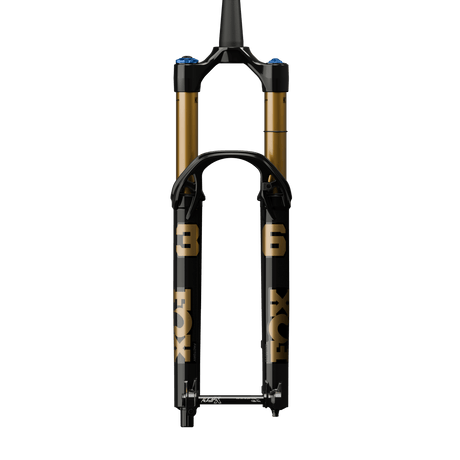
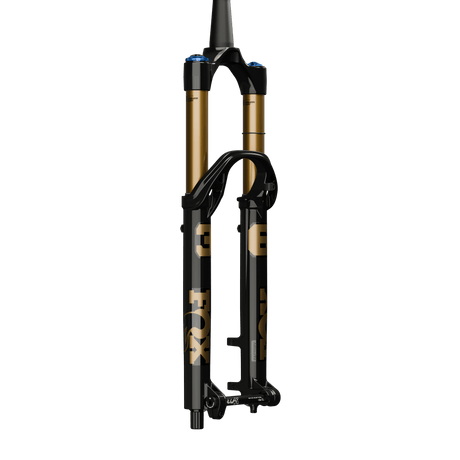
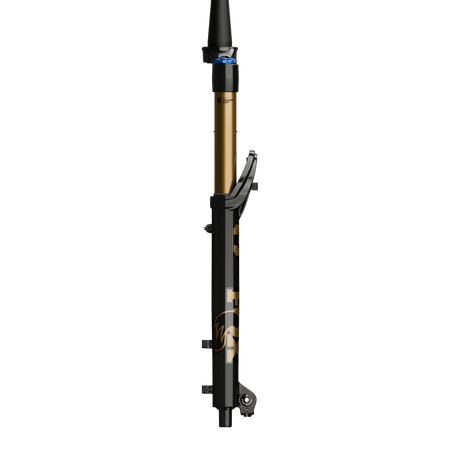
When you say to your brain, “hey brain, think of a really cool mountain bike fork” the image that pops into your thoughts is most likely a Shiny Orange Fox 36 with the Factory Kashima coating. So both you and I know the Fox 36 is the hottest fork on the market, but why? I’m Mike from The Lost Co, and in today’s blog I’m going to talk about how the Fox 36 rides, how it holds up, and overall why it’s my personal favorite piece of mountain bike gear.
So for about 15 months now, I’ve been pedaling up mountains, smashing through rocks, and hitting some big ol’ jumps with my Fox 36. I’m riding the top-tier 36 with the Factory Kashima coating, GRIP2 damper, and that pretty Orange paint. First, lets talk about how this fork performs on the trail.
How Does It Ride?
Now some of the things I’m going to say really comes down to personal preference, and comparing high-end suspension to high-end suspension really comes down to personal preference. So I’ll start by saying that it’s pretty weird for me to ride a bike with a different fork on it. Not only of course am I just used to my bike setup, but when riding a different bike with a different fork on it, the whole time I’m riding I’ll say to myself “man, this bike would ride so much better with a 36 on it”.
The top-tier fork uses Fox’s amazing GRIP2 damper and newest EVOL air spring packed into 36mm Kashima coated stanchions which all makes one beast of a fork. The damper and air spring work together to create a fork with virtually no stiction.
The top of the fork’s stroke is as soft and stiction-free as you can possibly get to matching the sensitivity of a coil sprung fork but with an air spring. When squishing the fork on the ground before installing it on a bike, it’s seriously crazy how little force it takes to get the fork moving into it’s travel and it has noticeably less stiction than other forks. No, I haven’t tried a coil spring conversion with the 36, but with how plush this thing is I feel like there’s absolutely no reason to spend the money and add the weight to put a coil spring in it. Alright, let’s dive deeper into the damper, air spring and everything else.
The GRIP2 Damper
...bashing through rocks...
Now onto the heart and soul of the Fox 36, the GRIP2 damper. The 36 is available with two damper options: the FIT4 and the GRIP2. If you’d like to learn more about the difference between the two dampers in a non-technical way, click this link.
Basically, the FIT4 is a less adjustable sealed cartridge damper, and the GRIP2 is a super adjustable, semi-sealed cartridge damper. Personally, I’m running the GRIP2 damper and I’d recommend that pretty much everyone getting a Fox 36 runs this damper as well. No, you don’t get a lockout lever like the FIT4 damper, but the way the GRIP2 damper is designed makes it feel, in our opinion, much better than the FIT4 damper when you’re riding terrain that warrants riding a Fox 36 over a Fox 34.
Also, everybody I ride with, myself included, doesn't ever wish we had a lockout, or use one on previous forks we’ve had with them. We do super long pedals to get to the top of the trails up here in the PNW and this is just something that is not an important factor to us.
The GRIP2 damper uses a new sophisticated oil which is infused with PTFE (Polytetrafluoroethylene) to make the oil super slippery, and since this is a semi-sealed design instead of a sealed cartridge damper like the FIT4 fork, this means that fluid works itself in and out of the damper while you’re riding which results in less stiction and overall more sensitivity. The semi-sealed design lets oil come and go freely from within the damper, which means the tolerance of the seals don’t have to be so super-tight, resulting in less stiction. Some past forks from Fox have been known to be over-damped, meaning they had too much compression and rode pretty stiff. However, the GRIP2 damper is totally new and rides much softer and more sensitive than past Fox dampers.
To me, riding a Fox 36 with the GRIP2 damper is like riding on a cloud. I’m serious. It’s so sensitive that I can pretty much feel every little rock being absorbed by my fork, and I just feel like I’m glued to the ground when I have my settings fairly open which results in amazing traction with the front tire.
I love how much I can adjust this damper, because you can really get this thing to ride exactly how you want it to ride. You can set it up to be super active and absorb every tiny bump, or run it with more compression and faster rebound for a more supportive, race setup.
You’ve got so much adjustability with the rebound and compression, that you can set it up to be both glued to the ground with mega traction but at the same time still poppy and playful. Overall this damper has 4 adjustments: HSC, LSC, HSR and LSR.
The abundance of adjustments might be confusing to some of you that aren’t super in tune with tuning suspension, but don’t worry, we’ve got a super in-depth video explaining how to set up this damper if you click here.
The GRIP2 damper is also as consistent as they come since it works so efficiently. On long descents, the damping performance feels the exact same at the bottom of the trail as it does at the top. I’ve never felt any noticeable fade in performance due to heat or anything like that. This is important to someone like me who rides a ton of bike park and shuttles quite a bit with descents typically over 2,000 feet. My hands and forearms definitely owe it to this fork for keeping things super soft and smooth on all of my big ride days.
I really do think that Fox has absolutely nailed it with the GRIP2 damper, as it doesn’t have any negative riding characteristics in my eyes of being too soft and wallowy, or too stiff and harsh. To me, it just rides, pretty freaking perfect.
EVOL Air Spring
On the other leg of the fork, the EVOL air spring is self equalizing, meaning you just put air in the top of the fork and it will automatically move the correct amount of air down into the negative air spring through an indent on the inside of the stanchion tube. Speaking of the negative air spring, it’s high volume and is a big reason why the fork feels so soft on small bumps. The EVOL air spring is Fox’s newest air spring design which debuted back in model year 2018. Then in model year 2019 Fox updated this even more to add a rubber conical top-out bumper.
I’m using 2 volume reducers in the air spring and I feel as if this is the best place to start when tuning the fork since it makes the spring curve pretty neutral with a perfect amount of progression to keep the fork from bottoming out easily but still maintain a slightly linear and predictable feeling.
And when you really screw up and smash the fork super hard, the bottom out feeling is nice and soft instead of a harsh clunk. In my time with the 36, I think I’ve only felt this thing bottom out about three times, which I owe to the volume reducers and EVOL air spring. The combination of the EVOL air spring and GRIP2 damper equals a super sensitive trail feel.
Welp, lets just say that this air spring is dialed at this point, and like I said before it’s about as close as you can possibly get to having the sensitivity of a coil sprung fork but with an air spring.
Stiffness
Last but not least, the Fox 36 has, of course, 36mm stanchions. This keeps the fork nice and stiff and definitely falls into the “enduro” category of suspension forks.
The lowers are magnesium to keep the weight down and the crown is machined enough to be reasonably light while still maintaining an overall stiff feeling.
Overall, the feeling of the damper combined with the EVOL air spring and 36mm stanchions creates a stiff, supple, plush and highly adjustable fork which I personally wouldn’t trade for anything else.
Durability and Reliability
This fork will happily take you down thousands of vertical feet of rough trails
After 15 months of pounding on these forks and selling tons to customers all over the place, its safe to say that there aren’t any consistent issues with the new Fox 36 or any part of it. Since the GRIP2 damper’s seals don’t need super tight tolerances then there’s less stiction, causing less heat, meaning more reliability.
Also, since there isn’t a bladder constantly expanding and contracting on every hit like many forks, you don’t have to worry about replacing the bladder during a full service every year. Since the oil in the lowers is the same oil in the damper, you should definitely keep up on lowers maintenance to keep things running smooth, but the really nice thing is that you don’t need to bleed the damper which makes it a lot easier to work on than most high-end dampers.
Extra Credit Reading
The current Fox 36 uses a 180mm rotor post-mount, is available in both 15x100 non-boost and 15x110 boost hub spacing and can be run from 140mm-180mm on 27.5” wheels or 140mm-170mm on 29” wheels. Also, if Fox doesn’t make a fork configuration in the travel you need, we can adjust the travel for you free of charge before shipping out your fork. So if you needed a 140mm travel Shiny Orange 36 which is only available in 170mm, we’ll lower the travel down to 140mm free of charge.
You can also get the Fox 36 in the Performance Series with the black stanchions which feels basically identical to the Factory Kashima fork, just with less bling and a little less money.
The Factory Kashima, GRIP2 Fox 36 sells for $1,079, while the same fork with the black Performance coating is $989. The FIT4 forks are slightly cheaper at $1,009 with the Factory Kashima coating or $909 with the black Performance coating.
Factory forks are available in either Shiny Orange or Matte Black, and we’ve got all sorts different color decal kits as well.