Watch the video!
Intro
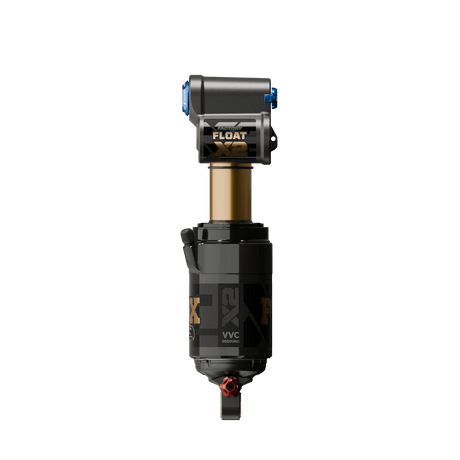
Nowadays, everyone in the market for the ultimate gravity air shock is left to decide between the newly redesigned Fox Float X2 Factory and the RockShox Vivid Ultimate. I’ve had the luxury of riding both of these shocks back to back on all sorts of terrain on my Transition Sentinel V3, getting accustomed to the ins and outs of both shocks. We’ll be splitting hairs between our two most eligible candidates. While there isn’t a clear winner between them, I’ll do my best to make the decision easy for you by the end of this. If you’re short on time and just want the Cliff Notes of this article, check out the rapid-fire YouTube video that covers everything you need to know, and nothing you don’t!
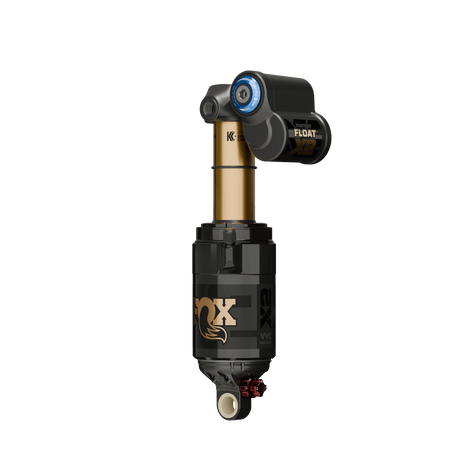
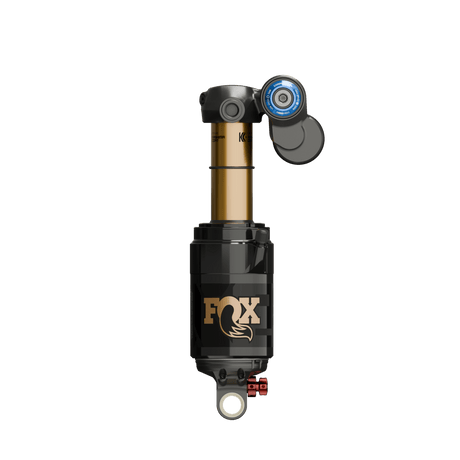
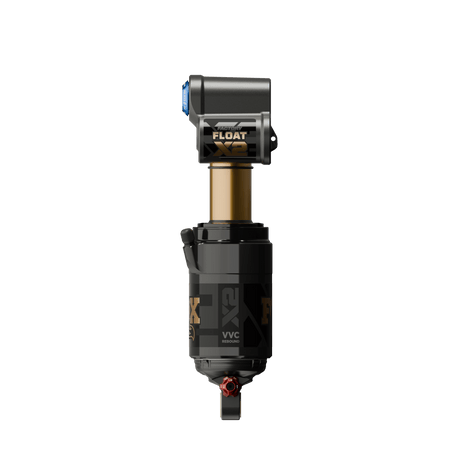
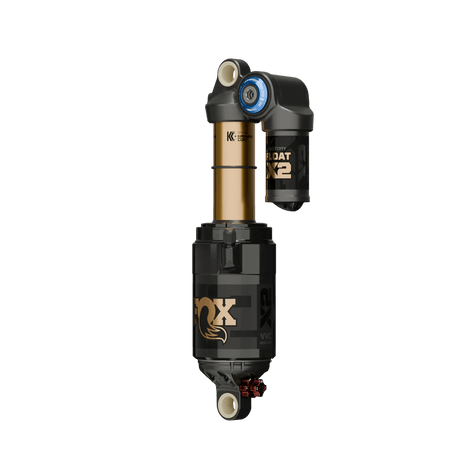
Fox Float X2 Factory
- LSC: 18 Clicks
- HSC: 8 Clicks
- LSR: 16 Clicks
- HSR: 8 Clicks
- Length options: 185, 205, 225, 210, 230, 250mm
- Weight: 708g (210 x 55mm)
-
MSRP: $739
RockShox Vivid Ultimate
- LSC: 5 Clicks
- HSC: 5 Clicks
- Rebound: 20 Clicks
- HBO: 5 Clicks
- Length options: 165, 185, 205, 225, 190, 210, 230, 250mm
- Weight: 740 grams (210 x 55mm)
-
MSRP: $699
Specs
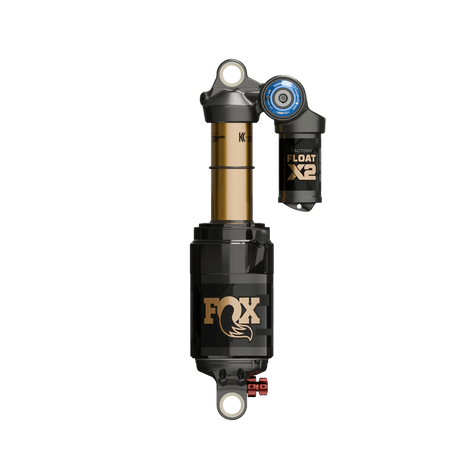
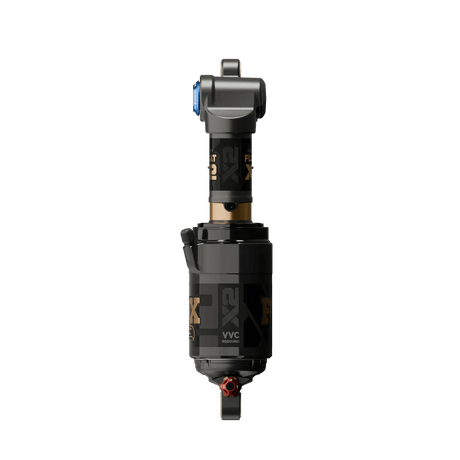
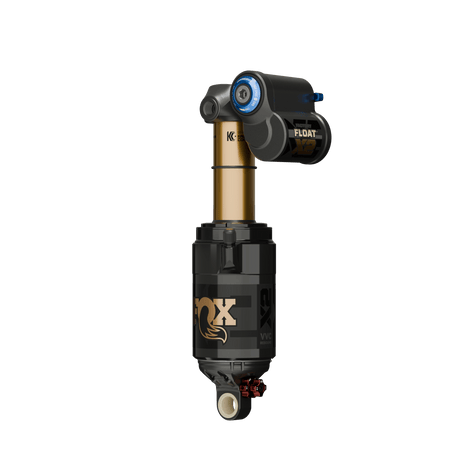
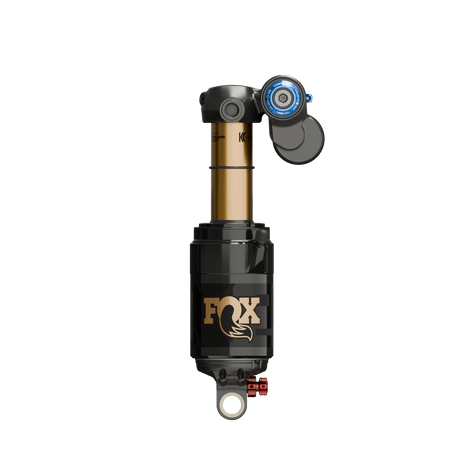
Physically, the shocks are strikingly similar. They boast big dampers and even bigger air cans, defining their silhouettes. This was even more true for the previous generation of the Float X2, but the new transverse reservoir gives it a slightly different look than the Vivid. Some sizes of the Float X2, like the DH sizes, still use the parallel reservoir, but the vast majority of Float X2 shocks use the new transverse reservoir for better frame clearance. Rarely will you encounter either of these not fitting a frame, but if you have issues during bottom outs, the Float X2 offers better clearance than the Vivid.
Both the RockShox Vivid and Fox Float X2 have gone through several generations of overhauls, with each shock using a twin tube design at some point, but now they’ve both settled on monotube constructions in their current forms. On the outside, you’ve got four way adjustability on both shocks, with the Vivid sporting LSC, HSC, Rebound, and HBO, while the Float X2 has LSC, HSC, LSR, and HSR. You’ll also find climb switches on all sizes besides the DH length Float X2 and Vivid shocks. Inside the air cans, you can add or remove volume spacers, as well as adjust psi to dial in your air spring. Both shocks are offered in metric sizes for DH, Enduro, and All Mountain bikes, and the Vivid is also offered in shorter lengths for shorter travel trail bikes.
Many bikes will come specced with lower end versions of the Vivid, such as the Base, Select, and Select +, but we're focusing on the Vivid Ultimate in this article. All of the more affordable Vivids can be upgraded to the Ultimate spec with the RC2T damper upgrade, which I would highly recommend for anyone looking for maximum adjustability. Fox's Float X2 is offered in Factory and Performance Elite Series, both of which have identical internals and arguably identical performance. Fox would argue that the Kashima coating is an advantage, but I would argue there's some placebo at play.
Big air cans, big reservoirs
Service
No shock will last you until the end of time without service, and both the Float X2 and Vivid have regular service intervals that need to be followed if you want them to perform like I’m describing in this article. Servicing either shock isn’t the easiest process in the world, requiring several specialty tools and technical know-how, and I would strongly recommend having a professional nurse your shocks back to health when the time comes.
The Float X2 needs a complete service every 125 hours, while the Vivid needs an air can service every 100 hours and a damper service every 200 hours. Here at The Lost Co, a full service costs about $200 and an air can service costs about $100, so the Float X2 comes out to $1.60 per hour and the Vivid will cost $1.50 per hour if you’re nailing your service intervals. Suspension service is our specialty here at The Lost Co, and if you need one of these shocks or any other mountain bike suspension serviced, give us a call!
Air Springs
First impressions mean something, and that big air can is certainly an eye catcher. If you read the marketing backing of either shock, both are touted as coil-like in their initial stroke, with the end stroke support you expect from an air shock. On trail, that proves to be the case, with the air spring providing exactly what they advertise. Among the air shocks, these two options rise above everything else I’ve tried in their initial stroke suppleness, with the shocks effortlessly flowing into their travel when their number gets called.
But when it comes down to a head to head in suppleness, the Vivid has a slight edge. Feeling that suppleness is a bit of a rare occurrence, and you’re hardly ever in the initial stroke of your shock. In those scenarios where the bike is airborne and skipping over the terrain, you can really get a sense of a shock’s performance in the initial stroke. Neither shocks are slouches in getting up and out of the way, but the Vivid lets the rear wheel disappear with a little less resistance than the Float X2. RockShox would point to their TouchDown technology, which bypasses all compression damping in the first 10% of the Vivid’s stroke, and could certainly explain the Vivid’s liveliness off the line.
About the same maximum pressure in both shocks. It's interesting that the Vivid is volume spacer sensitive while the Float X2 is not.
Tuning the air spring with volume spacers is commonplace with any air shock, and that’s the case with the Float X2 and the Vivid. You’ll receive a few volume spacers in the box with either shock, but their respective volume spacers are quite different. Fox’s orange Float X2 volume spacers are just 1cc, significantly smaller than those of the Vivid and the previous generation Float X2 volume spacers. That means riders can really fine tune the progression with smaller jumps between each volume spacer, further adding to the tunability of the Float X2. When fully loaded, the Vivid gets to be more progressive than the Float X2, which could make it a better option for digressive leverage ratio bikes, but I don’t think many riders want either shock completely full of volume spacers.
Custom Tunes
Custom tunes have exploded in popularity in recent years, with RockShox playing a large part in that change. They have a huge library of frame specific custom tunes that are supposed to give increased performance when paired with those frames, but for this test we used the standard off the shelf aftermarket Vivid tune. Likewise, the Float X2 also had the normal aftermarket tune with no funny business going on, but suspension gurus can also tune the Fox Float X2 in the same way as the Vivid.
Start with your external adjusters before turning to custom tunes
Lots of riders get sucked down the custom tune rabbit hole, fearing that their standard tune is going to hold them back, but that’s just not the case for the vast majority of riders. Upgrading to either of these shocks with a stock tune from a Float X or Super Deluxe is going to be a huge performance upgrade, as the overall architecture of the shock is what’s providing that performance. You’ll get 99% of the suspension performance these shocks can provide with the stock tunes, and getting your shock custom tuned before even riding it is a futile effort.
There’s no way for you to know what kind of tune will be optimal for you, your frame, the terrain you ride, and even more factors without ever riding the shock first. If you play with all the external adjustments and find that you can’t get to a suitable setup, then a custom tune could make sense, but the majority of riders are going to be right at home on the stock aftermarket tune.
Rebound
Diving into the different rebound adjustments for the two shocks, Fox has split their rebound circuit into tool-less high and low speed rebound adjusters, while RockShox has one catch-all tool-less rebound knob. That one all encompassing rebound knob of the Vivid performs very similarly to the low speed rebound of the Float X2, and the Vivid lacks control over the high speed rebound. How big of a deal this is will vary from rider to rider, depending on their high speed rebound preferences, but I found the Vivid’s high speed rebound characteristics to be about what I was looking for.
With the low speed rebound knob of the Float X2 or single rebound knob of the Vivid, riders can control how quickly the shock accelerates as it begins to rebound from a compression. Getting this adjuster right is crucial to getting a dialed setup, as it plays a huge role in how settled the rear end is through repetitive impacts. When set too fast, it gives an unpredictable and destabilizing sensation, as the shock pushes too much energy back to the wheel too quickly, but when set too slow, your suspension feels unresponsive and dead when generating pop or speed out of corners.
Turn left for turtle and right for... Jackalope?
High speed rebound on the Float X2 controls the maximum rebound speed, just like the governor on your Tacoma. Adding high speed rebound on the Float X2 will limit the speed the shock accelerates to, and has some influence on your low speed rebound too. Closing off your high speed rebound will definitely damp the rebound acceleration, albeit to a lesser degree than the low speed rebound. For the majority of my time on the Float X2, I’ve run the high speed rebound wide open, and used the low speed rebound adjuster to control the shock. Plus, the high speed rebound knob is comically difficult to turn, and if it’s difficult to access on your frame, it’s definitely a set it and forget it adjustment.
While the Vivid doesn’t have an external high speed rebound adjuster, it still has high speed rebound characteristics. Those characteristics can be tuned by a suspension guru, but with the stock aftermarket rebound tune, the high speed rebound feels only a touch slower than the Float X2’s high speed rebound. I didn’t have any issues with that stock tune, but I may opt for a slightly lighter rebound tune the next time it’s in for a rebuild.
Compression
Both shocks have the same high and low speed compression adjustability, making this an apples to apples comparison. You’ll find compression adjusters on the reservoir of both shocks, and you’ll need hex keys to adjust all but the LSC on the Vivid. Resourceful Vivid riders can use the rebound knob to adjust their HSC, as it pops out and doubles as a 3mm wrench. Float X2 tinkerers better come prepared with a multi tool, as you’ll need a 6mm wrench for the HSC, and a 3mm wrench for the LSC.
While the Float X2 has far more clicks of LSC than the Vivid, the range of adjustability isn’t as different as I’d expect. When wide open, the Float X2 and Vivid have a very comparable amount of LSC, and I found that to be borderline unrideable for both shocks. With wide open LSC, I would find myself deep in the travel while pumping and compressing into lips, so adding compression was on tap for both shocks. That kept both shocks higher in their travel and would transfer energy far more efficiently through g-outs and corners. When fully closed, the Float X2 rides a bit firmer than the Vivid, but the difference isn’t night and day. Each click of the Vivid makes a drastic difference in ride quality, while the Float X2 takes 2 or 3 clicks for me to really notice a difference.
High speed compression is where the shocks’ performance differs, and they both excel in different areas. Adding HSC to either shock does a great job of keeping the shock settled through those heavy impacts, something that I think is required if you’re trying to ride your bike fast through rough terrain. Harshness is a word that gets thrown around with suspension, and I’ve always found that going too far with HSC is a surefire way to find harshness out there on trail. Fox has done a great job with their HSC circuit, and I’ve found that I can add more HSC on the Float X2 before the shock gets harsh compared to the Vivid. That extra compression does a great job of holding a bit of travel in reserve in case of another impending impact, while the Vivid is slightly more likely to use all of its travel in those same instances.
When adjusting the Float X2 HSC, there’s noticeably more “cross talk” between the two compression circuits than on the Vivid. As I add HSC, I’ll generally back off LSC to keep the same ride characteristics, but that’s not necessary with the RockShox Vivid. I’m not sure if that’s a result of the compression circuits being physically further apart from each other, but the LSC characteristics don’t change when you adjust the HSC. That separation makes for easy compression tuning on the Vivid, while the overlap in compression adjustments on the Float X2 can lead you astray while finding your way to perfect shock setup.
Bottom out control
While bottom out events should be rare, I believe that they should be happening occasionally, and the Vivid does a fantastic job of controlling those events. You probably know about the adjustable HBO found in the RockShox Vivid, but there is also a lesser known traditional rubber bottom out bumper helping with the heavy lifting of controlling a bottom out. Fox leans completely on their rubber bottom out bumper, and it’s not adjustable at all. Riders can easily tune the last 20% of the Vivid’s travel by adding or removing damping via the HBO circuit, which essentially acts as a third compression circuit. When tuned correctly, that HBO circuit does a great job of all but deleting normal bottom outs, and the Float X2 just can’t quite compete in this category. You can add volume spacers, but that affects more than just the last 20% of the stroke, making the Vivid’s HBO a very unique and effective feature.
Start with 0 clicks, add until bottom outs are deleted
Overall Ride Feel
Once you’ve done your bracketing and really figured out these shocks, they’re both an absolute treat to ride. Quiet, supple, and supportive are the words that come to mind when describing either shock, and after getting to ride them back to back, the Float X2 and Vivid really are more similar than they are different. With similar overall architecture, identical intentions, and the same target market, it’s no surprise that I would have a hard time telling these shocks apart if I could somehow ride a bike blindfolded.
My main takeaway between these two shocks is where they prefer to ride in their travel. Consistently slightly higher in its travel, the Float X2 manages each impact with slightly more efficiency in your standard operating travel range. When between 30% and 75% of travel, you’ll consistently have slightly more travel on tap for the next impact with the Float X2, which is a result of getting to run slightly more High Speed Compression damping compared to the Vivid. But when you’re outside of that 30-75% of travel range, the Vivid has a slight edge. Getting into travel with slightly less resistance and taking the edge off the biggest hits with more composure are the Vivid’s strong suits.
Conclusion
We’ve made these RockShox vs Fox comparisons before, and the two brands’ suspension ethos runs true with the Vivid and Float X2. Generally, the RockShox Vivid is going to be a more comfortable and easier to set up shock, while the Fox Float X2 is potentially more difficult to set up but can offer more support when pushing hard. If you’re racing enduro or downhill bikes where every second matters, I would recommend choosing the Float X2. But if you’re on the hunt for comfort and suppleness, the Vivid is a little more affordable and would be my recommendation for you. Luckily, there’s no wrong choice in this decision.